
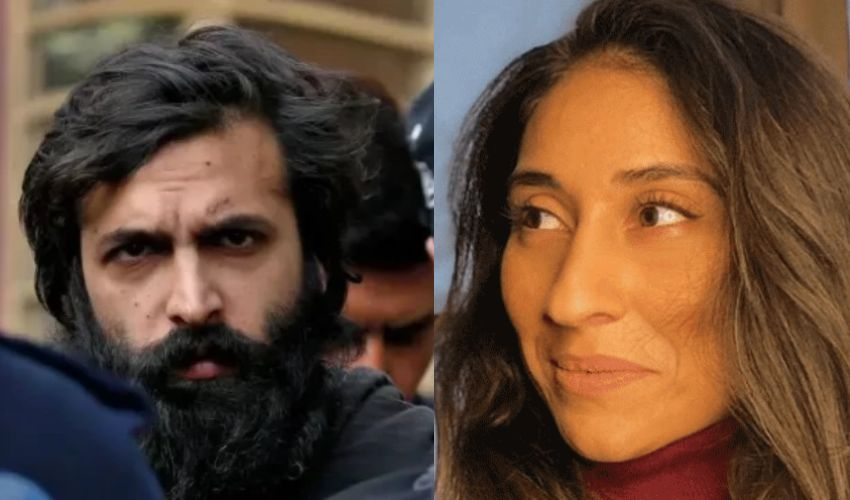
The Supreme Court of Pakistan has upheld the death sentence of Zahir Jaffer in the high-profile Noor Mukadam murder case, dismissing his review petition and rejecting a request for the formation of a medical board to assess his mental health.
A three-member bench headed by Justice Hashim Kakar, along with Justice Salahuddin Panhwar and Justice Ishtiaq Ibrahim, delivered a unanimous verdict after hearing detailed arguments for nearly four hours. The ruling effectively closes another legal avenue pursued by the convicted murderer in an attempt to challenge his death sentence.
During the proceedings, Zahir Jaffer’s counsel, senior lawyer Khawaja Haris, focused primarily on the convict’s mental health. He acknowledged that Noor Mukadam had been wronged and clarified before the court that he was not disputing his client’s involvement in the crime.
Instead, the defence argued that Jaffer suffered from mental health conditions, including bipolar disorder, schizophrenia, and depression, which allegedly affected his state of mind at the time of the incident and throughout the trial. The lawyer maintained that medical records showed the convict had been receiving medication while in custody.
However, members of the bench questioned the evidence presented by the defence. The judges repeatedly asked for documented proof showing when treatment had begun and whether Jaffer was under medical care at the time of the murder.
Justice Salahuddin Panhwar also questioned a medical letter submitted from a London clinic, noting that it was dated after the incident and raising concerns about its relevance to the case. The court examined whether sufficient evidence existed to support claims regarding the convict’s mental condition.
The defence further argued that authorities had not conducted a drug test on the convict after the crime and suggested that public pressure and media attention may have influenced aspects of the investigation and trial process.
Justice Hashim Kakar firmly rejected the suggestion that courts make decisions under media influence. He emphasized that judicial decisions are based on evidence and legal principles rather than public opinion or social media narratives.
The bench also questioned what legal relief the defence sought through the review petition. While Khawaja Haris referenced previous cases where courts had ordered retrials, he clarified that he was not seeking a retrial but rather a reduction in the sentence.
The judges noted that earlier requests for the formation of a medical board had already been rejected by the trial court and were not challenged before higher judicial forums at the appropriate stage. As a result, the issue had attained finality and could not be reopened through the review proceedings.
During the hearing, Justice Kakar also made broader observations about violence against women in society, highlighting concerns over recurring cases involving female victims. The remarks underscored the wider social significance attached to the Noor Mukadam case.
Following the verdict, Noor Mukadam’s father, Shaukat Mukadam, welcomed the decision and reiterated his commitment to seeking justice. He revealed that a settlement offer had been conveyed through a third party but stated that he refused any compromise.
He emphasized that the case represented more than the pursuit of justice for his daughter alone, describing it as a symbol of accountability and protection for women across Pakistan.
The Supreme Court’s decision marks a significant development in one of Pakistan’s most closely watched criminal cases and reinforces the finality of the death sentence awarded to Zahir Jaffer for the murder of Noor Mukadam.